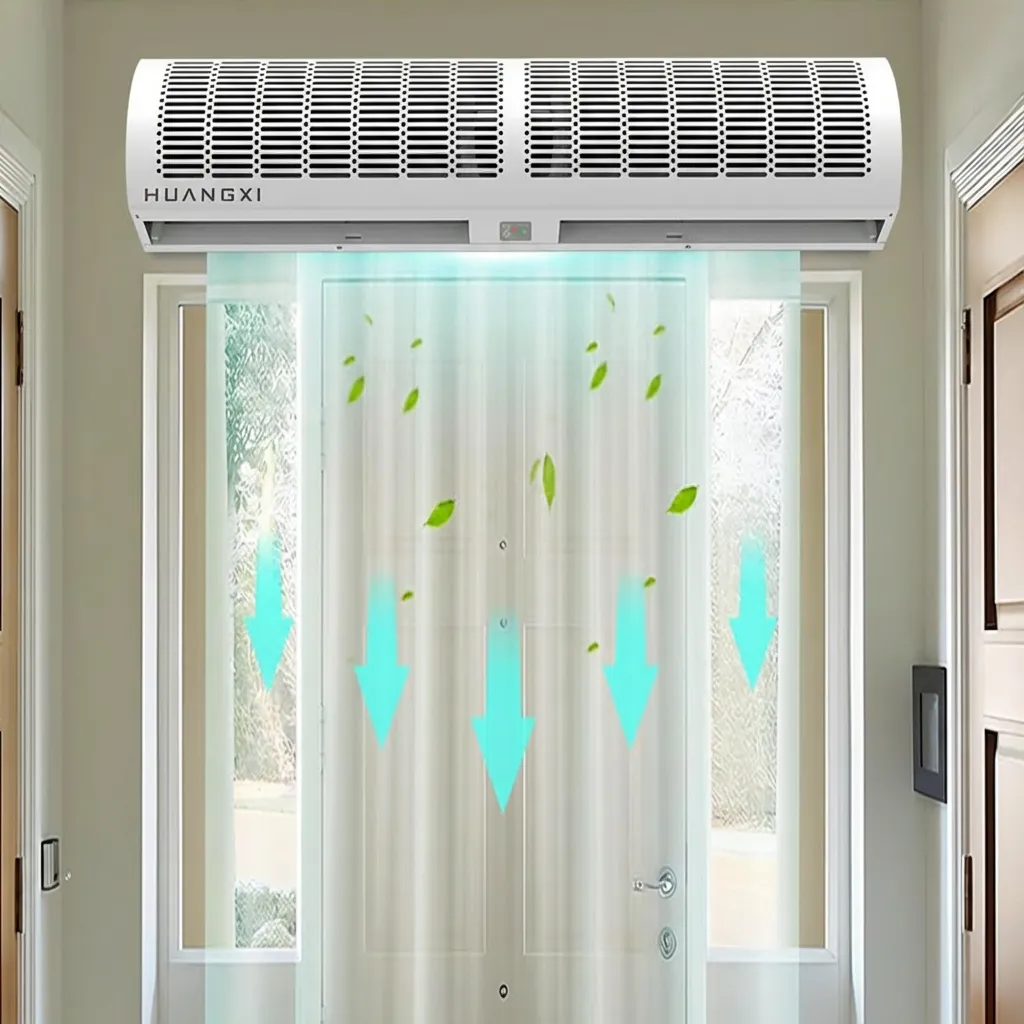
Air curtain creates a vertical air barrier that helps reduce energy loss while keeping indoor air clean and comfortable.
In commercial buildings like shopping malls, hospitals, and industrial facilities, frequently opening and closing doors often leads to significant energy loss due to unwanted air exchange. This not only impacts indoor comfort but also causes HVAC systems to work harder, driving up electricity costs. Many facilities have installed door air curtains in an effort to curb this energy drain—but do air curtains really save energy? In this article, we’ll explore the science behind air curtains, present field data, and share real-world industry case studies to explain why air curtains are indeed an energy-saving solution.
How Air Curtains Work: Creating an Invisible Air Barrier
An air curtain is a device installed above doorways that uses a combination of motor and blower systems to produce a high-velocity air stream across the door opening. This creates an invisible air barrier that prevents outside air—whether hot or cold—from entering, and conditioned indoor air from escaping.
In winter, air curtains stop cold drafts from entering and reduce heating loss. In summer, they block hot, humid air from entering cooled spaces, lightening the load on air conditioners. Since air curtains don’t physically obstruct passage, they allow for smooth traffic flow while continuously saving energy.
Verified Data: Air Curtains Are More Efficient Than You Think
According to a joint study by AMCA (Air Movement and Control Association) and TRC, air curtains can reduce air infiltration by 65% compared to an open single door, while traditional vestibule entrances reduce only about 23%. Further simulations show that air curtains can reduce annual building energy consumption by 0.3% to 2.2%, with potential electricity savings up to 18,986 kwh/year, especially in colder climate zones.
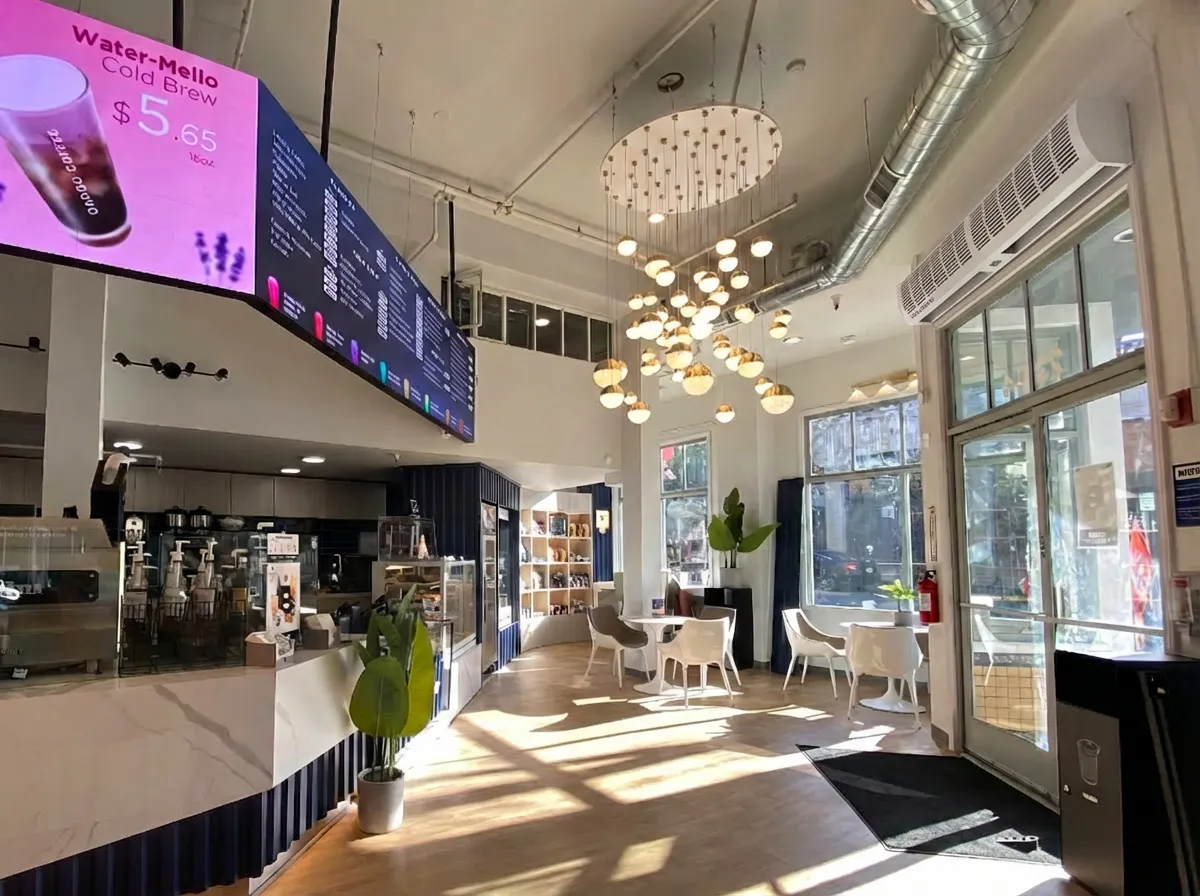
In cafés, quick-service restaurants, and dining areas, doors must stay open to welcome guests, but doing so leads to temperature fluctuations and pest problems. Commercial air curtains act as an invisible air barrier to prevent outdoor heat or cold from entering while keeping flies and insects out.
Case: Qargo Coffee, a U.S.-based chain, adopted our Q-Series air curtains in various stores with custom sizing. Sebastián Anzola praised their performance in blocking mosquitoes and hot air and confirmed the brand plans to install more units in upcoming locations.
Cold Storage & Logistics
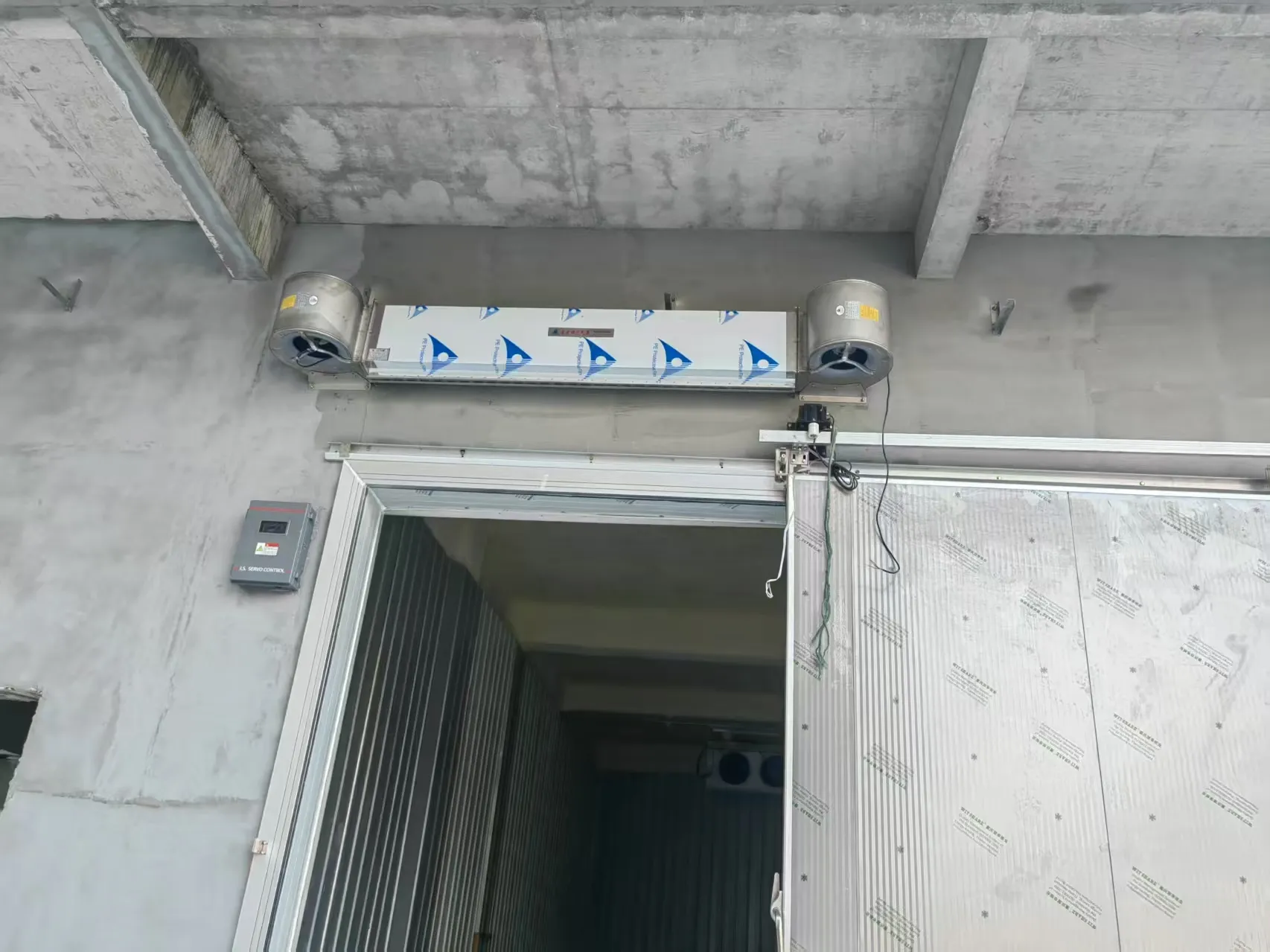
Cold storage facilities, cold-chain distribution hubs, and refrigerated supermarket areas are highly sensitive to temperature control. Frequent door usage can lead to serious energy loss.
Case: For Giovi’s end customer in Italy, we designed a system using an internal HFM-1220Q air curtain and an external HFM-3520LK(Cold storage air curtains). With a total investment of only $1,070, the double-layer air curtain setup reduced thermal exchange by over 80%. As a result, the evaporator’s defrost frequency dropped from 4 times/day to 1 time/day, prolonging equipment lifespan and maintaining a stable -18°C storage temperature, preserving meat freshness and color.
Healthcare Facilities
Hospitals and large clinics have stringent requirements for stable temperatures and clean air. Frequent entry/exit can disrupt indoor conditions and introduce pollutants.
Case: Mena House Hospital in Cairo replaced its traditional vestibule with an air curtain system at the emergency entrance. This reduced winter heating loss and lowered HVAC workload, resulting in a 9% reduction in heating costs. The air curtain also kept dust and contaminants out, supporting infection control.
Manufacturing & Warehousing
In industrial facilities with large loading docks or forklift traffic, wide-open doors can result in massive energy loss.
Case: In Dammam 2nd Industrial City (Saudi Arabia), a plastic injection factory operated a 4500 mm x 5000 mm industrial lift door that remained open about 4 hours/day. With outdoor temperatures reaching 46°C, maintaining an indoor 26°C was energy-intensive. After installing high-speed industrial air curtains, 80% of the heat ingress was blocked, saving an estimated 115,000 kWh/year in cooling energy—approximately 32,000 SAR in annual electricity costs.
Air Curtain Types and Recommended Applications
As a manufacturer and solution provider of air curtains, we offer tailored solutions for a wide range of facilities:
Commercial Air Curtain Series: Ideal for convenience stores, fast-food outlets, cafés, and hotels in temperate zones. Efficient, low-power door air curtains that reduce air exchange and help maintain comfort.
Heated Air Curtain Series: Built-in PTC electric heaters or hot water coils for hospitals, government offices, and northern commercial buildings. Perfect for winter climates.
Industrial Air Curtain Series: Designed for large doorways in cold storage warehouses, factories, and logistics bays. Can be mounted horizontally or vertically to block extreme air exchange.
Custom Engineering Air CurtainSeries: Stainless steel shell, explosion-proof, and anti-corrosion designs for environments like chemical plants, tunnels, pools, and cleanrooms.
Need help choosing air curtains? Contact us for a free consultation no matter what industry you are in.
Conclusion: Air Curtains Energy Savings !
Air curtains have proven to be highly effective energy-saving devices across a variety of industries. Backed by scientific data and real case studies, they can reduce air infiltration by over 60%, slash heating/cooling loads, and deliver strong ROI. Compared to costly vestibules, air curtains offer flexible, space-saving, and equally effective alternatives.
Whether you’re operating a hospital, cold warehouse, or retail chain, door air curtains can help you cut energy bills, improve comfort, and contribute to sustainability targets.
When energy efficiency starts at the door, air curtains are your invisible shield for real savings.
Newsletter Updates
Enter your email address below and subscribe to our newsletter