How Air Curtains Work: Key Mechanisms for Energy, Clean Air & Comfort
Air curtains, also known as air doors, are installed at doorways to form an invisible barrier that separates indoor and outdoor environments. By creating a high-speed downward air stream, air curtains prevent the intrusion of dust, outdoor air, and flying insects, while minimizing HVAC losses. If you’re new to air curtains, check out our first blog post: What Is an Air Curtain?
What Is The Working Principle of an Air Curtain?
To understand how air curtains work, we need to look at both their airflow design and internal components. Driven by a high-speed electric motor, the internal fan (typically a cross-flow or centrifugal blower) creates a powerful vertical air stream that covers the full doorway height. This air stream acts as a moving air barrier — known as airflow separation — which isolates the indoor environment from external pollutants.
When the air stream hits the floor, it forms a stagnation point, causing airflow to split sideways. Since airflow streams can’t penetrate one another, the separation prevents direct air exchange between indoors and outdoors. This minimizes HVAC energy loss and also blocks pests and particles from entering the building.
The air intake typically pulls in air through a front grille, passes it through internal filters, compresses it via the blower, and releases it down through the outlet nozzle across the full door width.
Common Fan Types Inside an Air Curtain
- Cross-flow (transverse) blower: uniform airflow, lower pressure — ideal for commercial doors
- Centrifugal fan: higher pressure — ideal for tall or wide entrances
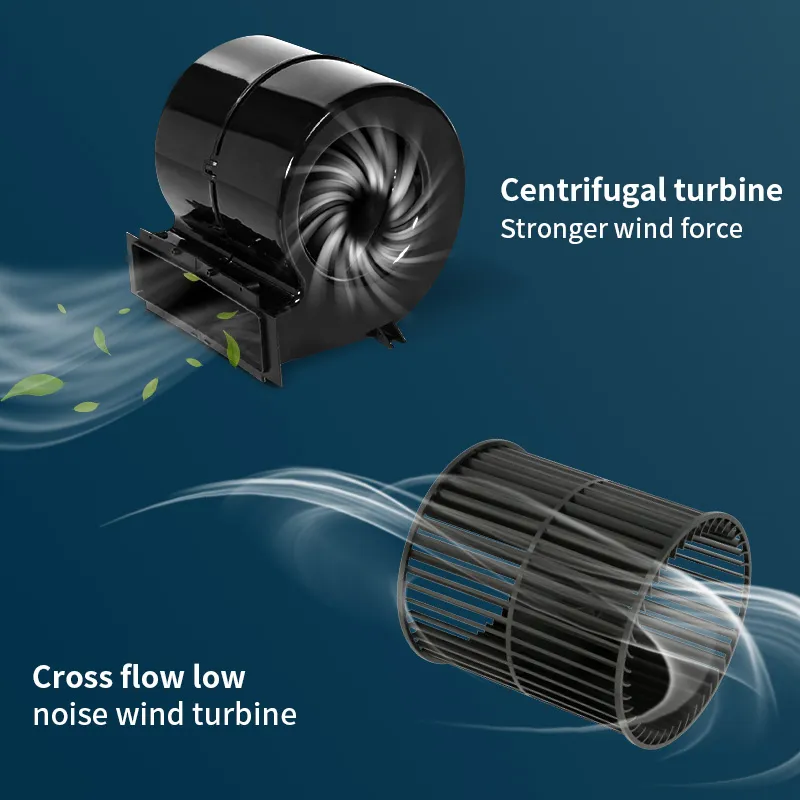
Huangxi Air Curtain’s Q-Series models feature optimized airflow guides and staggered silent fan wheels to reduce noise while maintaining high airflow force. Adjustable louvers allow for precise air angle control to ensure full doorway coverage.
Heated Air Curtains and Climate Comfort
Many air curtains come equipped with electric or hydronic heating elements, known as heated air curtains. While they do not directly heat interior spaces, the warm air helps neutralize cold outdoor drafts in winter, improving thermal comfort at the entrance.
During cold seasons, the downward warm airflow reduces wind chill effects on people passing through the door and minimizes cold air infiltration. Some models even allow integration with HVAC or chilled water systems to cool the airflow for special industrial environments.
Whether heated or non-heated, air curtains must have adequate fan power to reach the floor. Proper sizing — factoring in doorway height and width — is essential for maintaining continuous airflow separation.
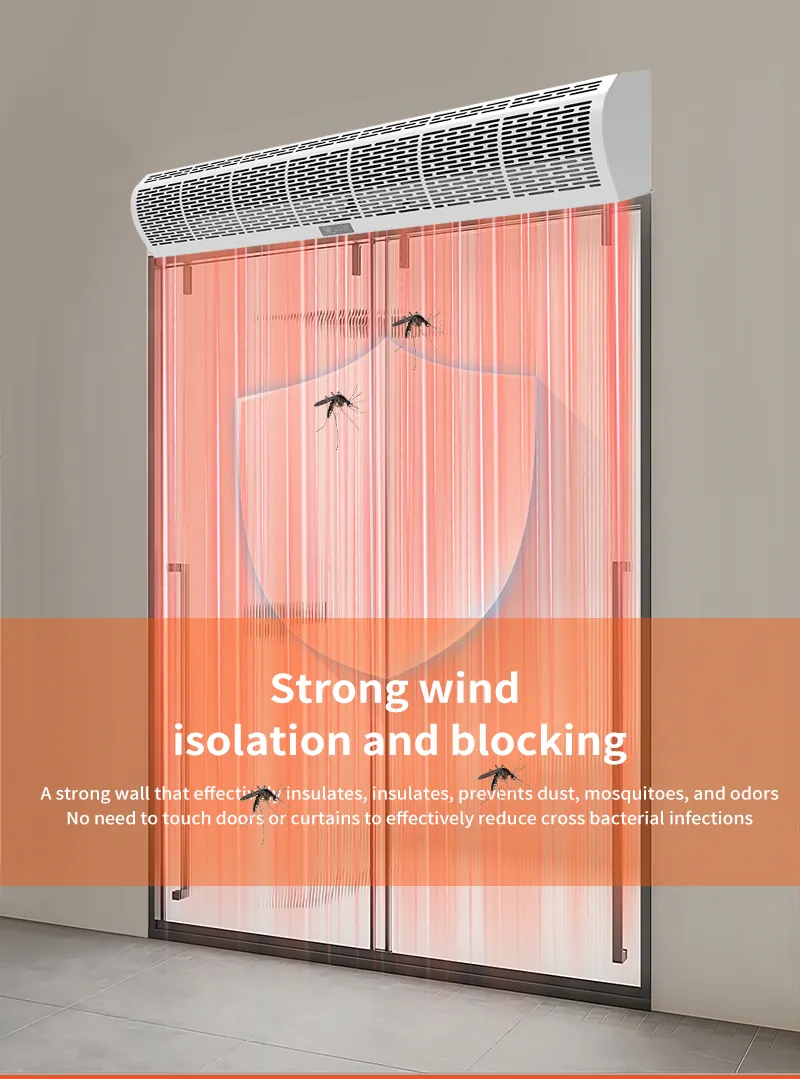
Functional Benefits: Dust Control, Insect Barrier & Energy Saving
Air curtains offer several core benefits thanks to their operating mechanism:
1. Dust and Smoke Control
The high-velocity airflow acts as an air wall, deflecting dust, smoke, and fumes from entering through open doors. This is crucial for entrances in warehouses, factories, and retail spaces exposed to wind and vehicle traffic.
2. Insect Prevention
Air curtains are a chemical-free solution for repelling flying insects. The turbulence and pressure of the airflow create an unwelcoming zone for bugs. When installed correctly, air curtains can block up to 80% of common flying insects.
3. Energy Savings
One of the main advantages of air curtains is reducing heating and cooling loss. In open-door retail or logistics environments, a properly functioning air curtain can block up to 60–80% of conditioned air from escaping. While the fan motor and optional heaters consume electricity, the net energy savings over time are often substantial.
According to industry research, air curtains can cut HVAC energy usage by up to 80% in some applications.
In cold storage or freezer areas, air curtains prevent warm moist air from entering, easing the load on cooling units.
Huangxi Air Curtain Models and Their Working Principles
Cross-Flow Series: Q-Series
- Ideal for retail and office use
- Quiet operation with optimized airflow
- Durable all-metal casing
Centrifugal Models: LY-Series
- Used in warehouses, loading docks, or tall doorways
- High-speed fans project air farther and harder
Heated Air Curtains: RY-Series
- Integrated electric heating coils
- Deliver warm airflow in cold climates
- Include safety systems such as thermal cutoffs
Explosion-Proof Models: Customized-Series
- Designed for chemical factories or paint booths
- Feature spark-proof motors and sealed components
All models utilize the same core principle: high-speed directional airflow across the entrance to achieve airflow separation.
| Feature | Heated Air Curtain | Non-Heated Air Curtain |
|---|---|---|
| HVAC Relief | ✅ | ✅ |
| Thermal Comfort | ✅ ✅ | ✅ |
| Energy Cost Offset | Higher ROI | Lower upfront cost |
| Suitable Use | Cold climates | Mild climates or indoor use |
Conclusion: Why Understanding How Air Curtains Work Matters
Air curtains are simple yet powerful devices. By using directed air movement to create an invisible barrier, they protect indoor environments from energy loss, dust, insects, and discomfort. Their applications range from restaurants and supermarkets to manufacturing and healthcare.
Technological innovations such as magnetic door sensors, EC motors, and intelligent speed control continue to improve efficiency and user experience. Ultimately, understanding how air curtains work empowers better product selection and integration into modern building systems.
Want help choosing the right air curtain? Visit our product pages or contact Huangxi Air Curtain for tailored support.