Commercial Air Curtain Selection Guide for Restaurants, Hotels, Businesses & Public Entrances
Commercial Air Curtain Selection Guide for Restaurants, Hotels, Businesses & Public Entrances 1. What a…

Open doors can increase HVAC energy use. Outdoor air enters, conditioned air escapes, and the HVAC system must work harder.
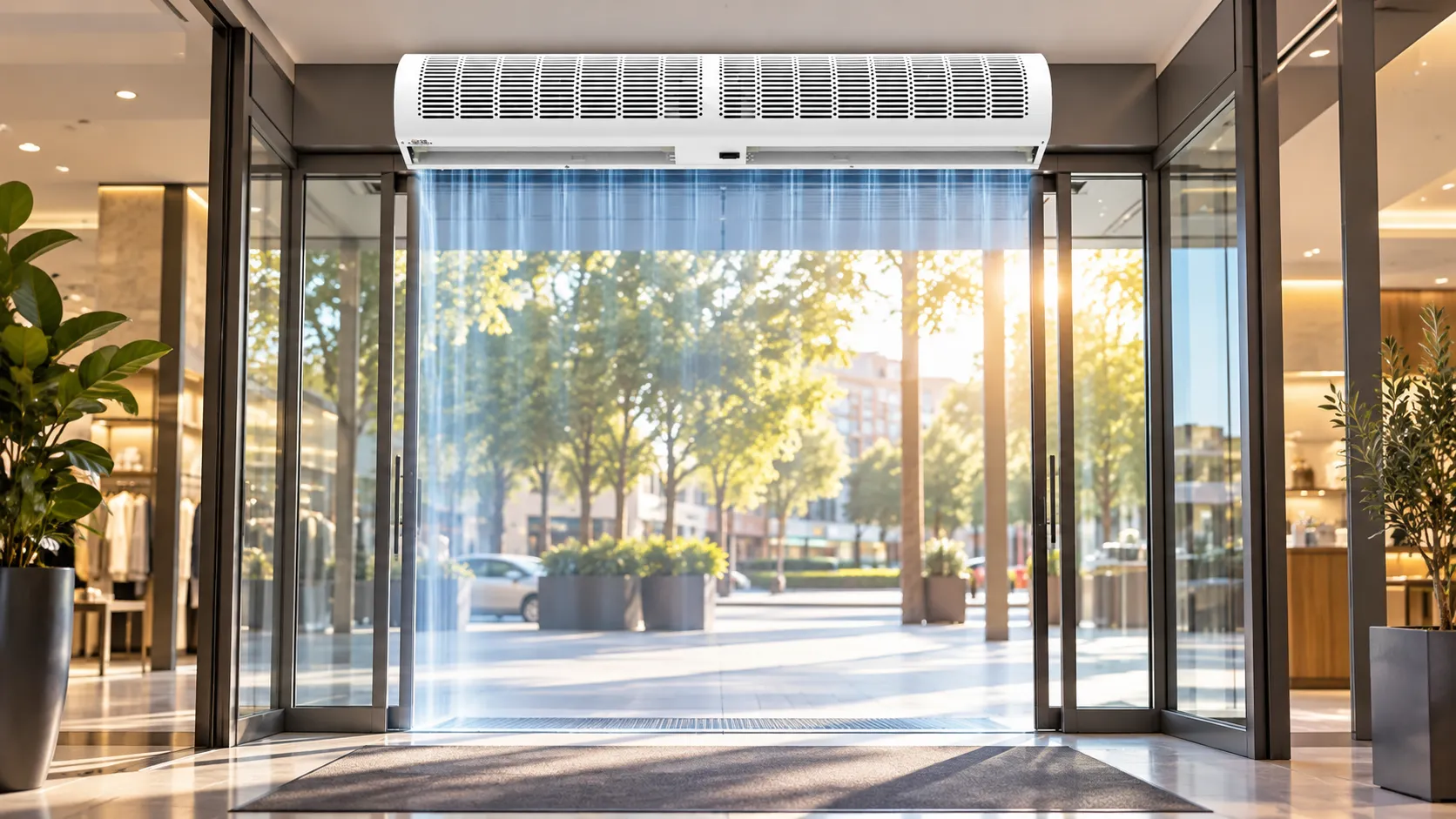
A correctly selected air curtain reduces this exchange. It sends a controlled air stream across the doorway while people and goods can still pass through. The air stream acts as an invisible barrier between indoor and outdoor air.
The energy goal is clear. The air curtain should prevent more heating and cooling loss than the fan energy it uses.
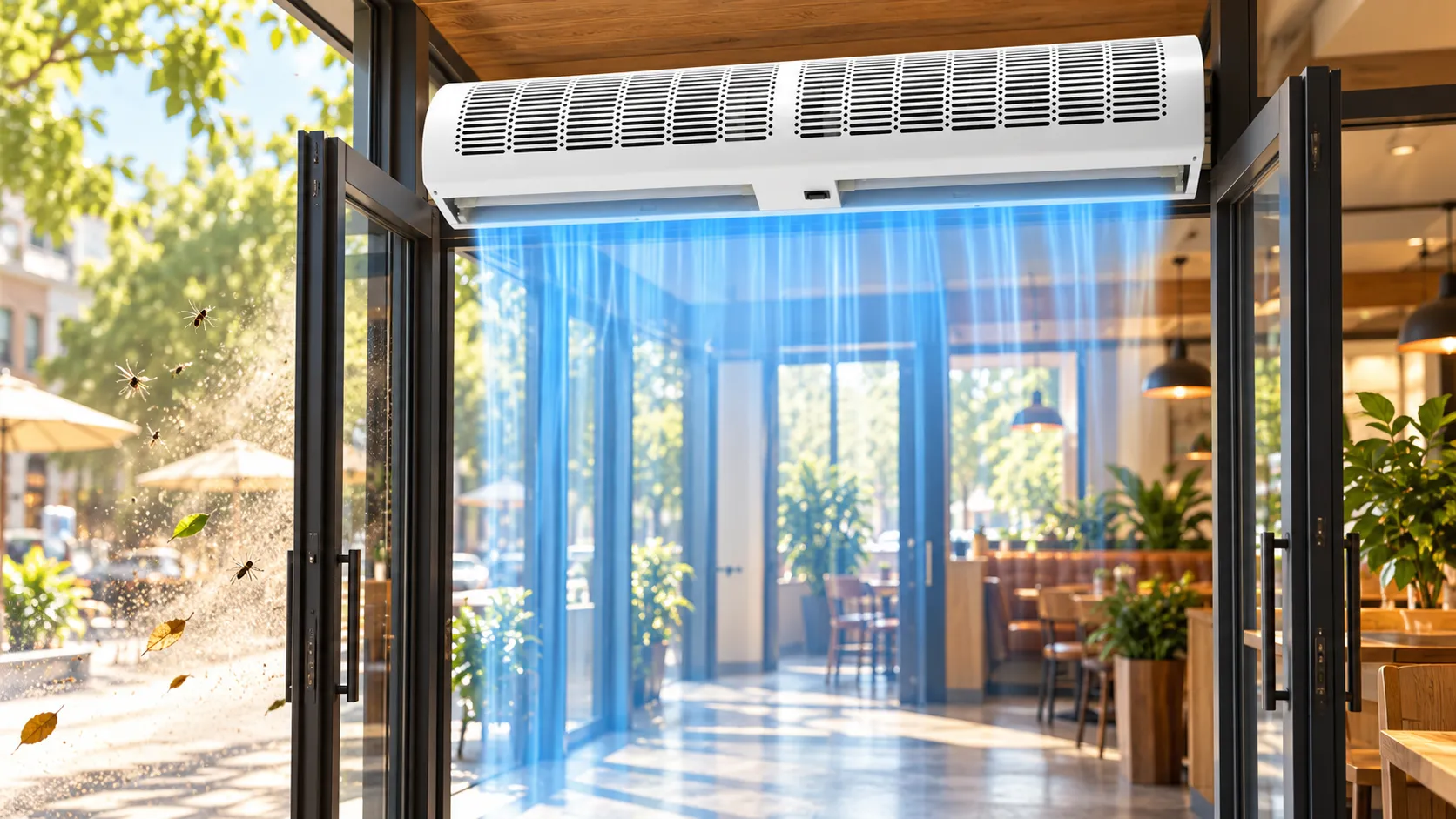
Air moves through an open doorway because of temperature differences, wind, and building pressure.
In winter, warm indoor air can leave through the upper part of the opening. Cool outdoor air often enters through the lower part of the doorway.
In summer, warm outdoor air can enter through the open doorway. In humid climates, it also brings moisture.
The HVAC system must then heat or cool this extra air. An air conditioner may also need to remove the added moisture. This raises building energy use and energy bills, especially at busy commercial front doors.
ASHRAE describes air curtains as controlled air barriers. They help separate spaces with different temperatures and resist wind. ASHRAE air-curtain guidance notes that correct application can reduce air exchange through an open doorway.
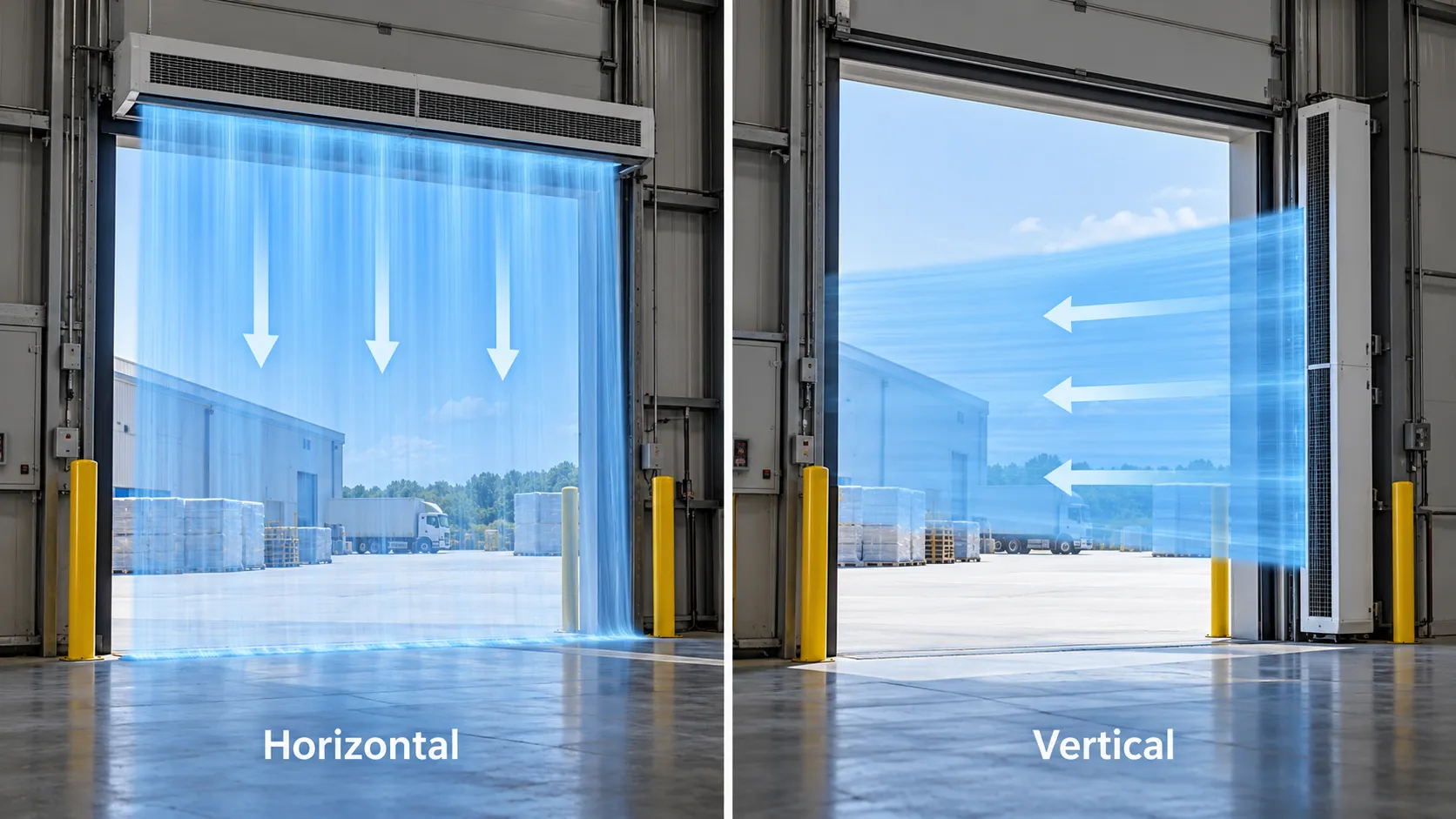
An air curtain uses a fan and outlet to move air across an open doorway. This type of air door limits unwanted air exchange without physically closing the entrance.
The air flow forms a controlled barrier between outdoor air and conditioned air.
The unit directs a steady stream of air across the doorway. This stream limits air exchange while people and goods pass through.
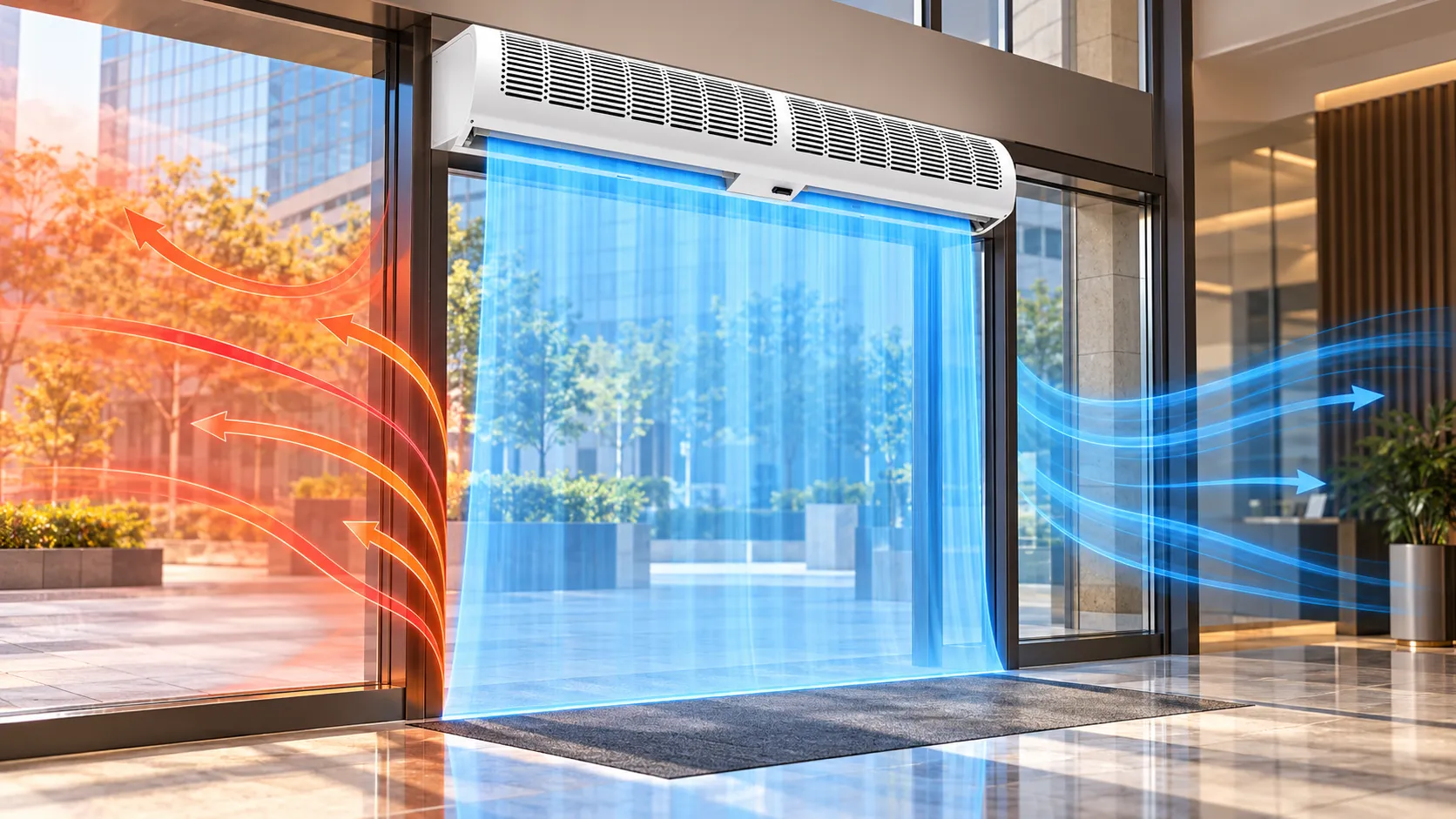
When less outdoor air enters, the HVAC system handles a smaller heating or cooling load. In humid weather, it also has less moisture to remove.
Less air exchange reduces the heating and cooling load. The air stream may also limit dust entering through the doorway.
Air curtains can save energy, but the result varies by building. Air curtains offer the greatest benefit when the doorway has frequent air exchange and the unit is matched to the opening.
ASHRAE reports a broad range of air-curtain energy effectiveness. The result depends on the unit, doorway, climate, and operating conditions.
Savings differ from one building to another. Door height, wind, traffic, and building pressure all affect the result.
Research on commercial buildings has reported lower entrance-related energy use with correctly applied air curtains. Results vary by doorway design and HVAC conditions. The Energy and Buildings study on high-traffic stores reports measured results. Concordia University research provides additional modeled examples.
Air curtain energy savings come mainly from reducing unwanted outdoor air at the door.
Air curtains work by creating enough air speed and pressure to resist incoming air. If the air speed is too low, wind or building pressure can push through the barrier.
If the unit is too short, air can enter through gaps at the sides.
Door hardware, signs, beams, or lighting can also block the air stream.
The strongest unit is not always the most cost-effective choice. Select enough air velocity and pressure to control the doorway without using unnecessary fan power.
The air curtain should cover the full clear width of the doorway. A small overlap is often helpful.
Door height determines how far the air stream must travel. A standard retail door often needs less air speed than a tall industrial entrance.
A commercial air curtain still needs useful air flow near the lower part of the opening. A high outlet speed alone does not prove good performance.
This is especially important for warehouse dock doors and other large openings in industrial facilities.
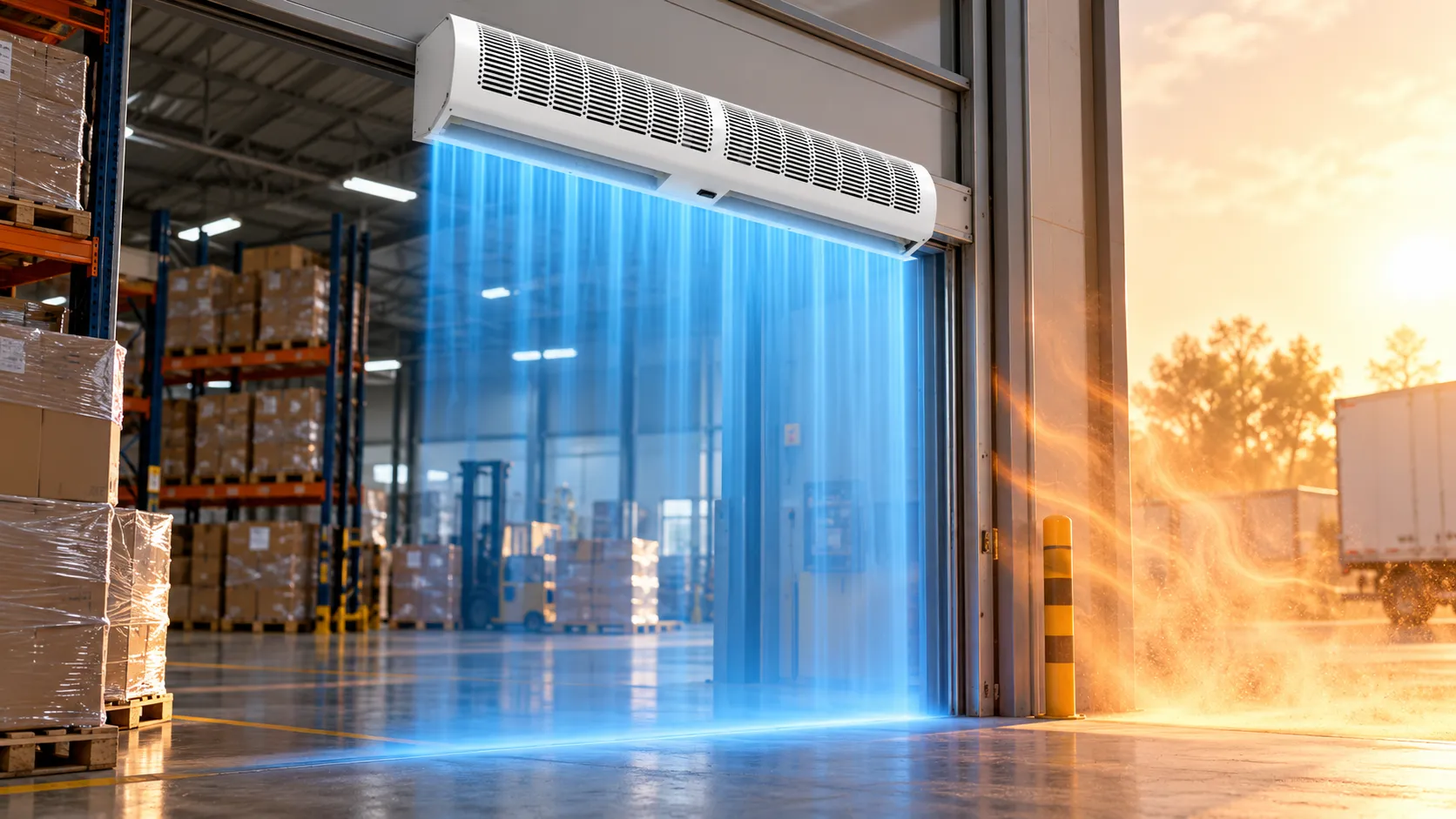
For standard commercial entrances, review the HUANGXI Q Series Air Curtain. The range includes several lengths for different door widths, with published air speed, air flow, and fan power by model.
A well-sized air curtain can still perform poorly if the installation is wrong.
Install the unit close to the doorway and keep both the inlet and outlet unobstructed.
The air stream should reach the lower part of the doorway instead of dispersing near the top.
Choose the fan setting based on the doorway conditions. Higher speeds use more electricity and can increase noise.
Start with the lowest speed that keeps the air barrier stable. This supports better energy efficiency and comfort.
A strong pressure difference can push the air barrier away from the doorway.
Kitchen exhaust, toilet exhaust, and process ventilation can create negative pressure. Strong wind can have a similar effect.
If the building pulls too much outdoor air through the entrance, a faster fan may not solve the problem.
The HVAC system may need better air balance or more make-up air. Correct pressure control can reduce energy waste and improve air-curtain performance.
The most energy-efficient choice is the type that provides enough air projection without unnecessary fan power.
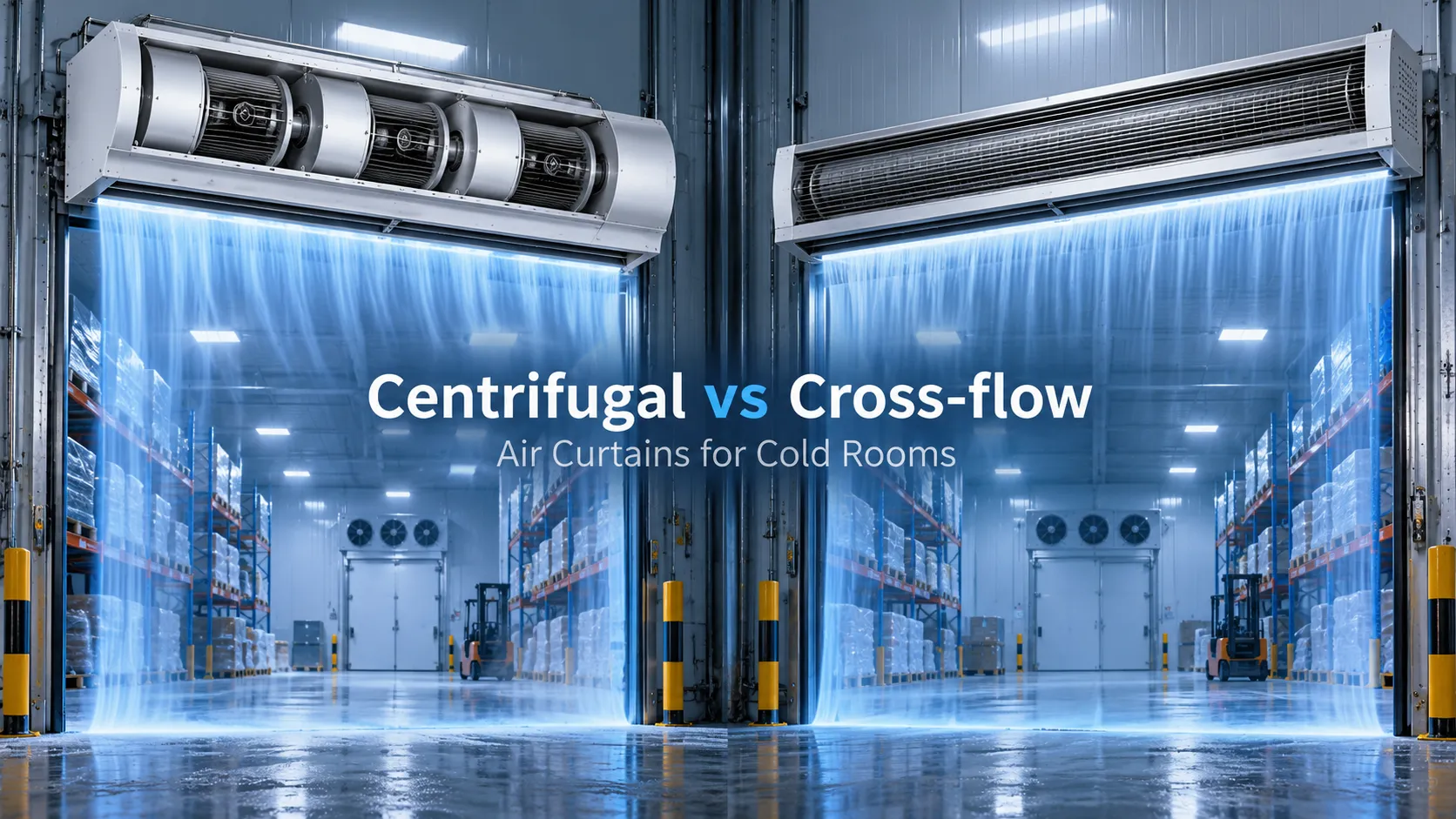
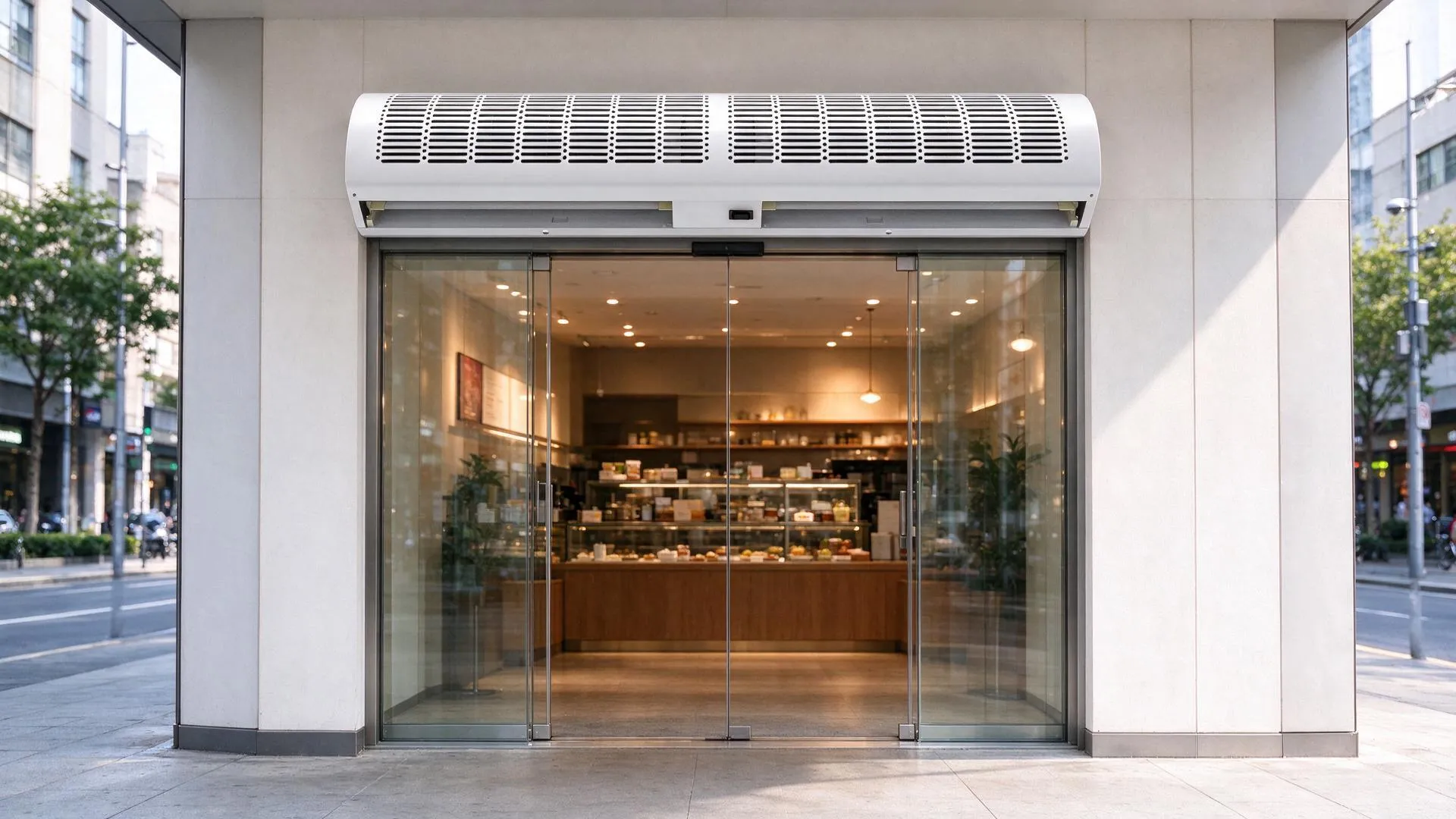
Cross-flow units are often suitable for retail stores, restaurants, pharmacies, and office entrances.
Centrifugal models provide stronger air pressure for taller doors or more exposed entrances. For these applications, see the HUANGXI Centrifugal Air Curtain LYA.
Recessed air curtains fit within the ceiling space. Only the outlet grille is visible from below.
For concealed entrances, see the HUANGXI Recessed Air Curtain. Select the model according to the actual installation height and doorway conditions.
An air curtain does not need to operate at full speed in every situation.
A door sensor can start the unit when the door opens. A presence sensor can also start the unit when people approach.
This control method works well when the door opens only at certain times. The fan can remain off while the entrance is closed.
A busy entrance that stays open for long periods may need longer operation. The control method should match real door use.
Good controls support energy savings without reducing doorway protection.
At entrances with flying insects, dust, or outdoor debris, stable airflow should remain the first priority. These secondary benefits do not replace correct air-curtain and HVAC sizing.
Hot and humid outdoor air adds both heat and moisture at an open door.
An air curtain can reduce both loads by limiting the amount of outdoor air that enters the conditioned space.
This is useful for supermarkets, hotels, restaurants, shopping centers, and food service entrances with heavy foot traffic.
An air curtain can help retain conditioned indoor air while reducing the entry of hot, humid outdoor air.
The lower air exchange can also reduce the cooling load on air conditioners and some heat pumps.
The final result still depends on wind, door use, and HVAC balance. A sheltered entrance is easier to control than an exposed street entrance. Air curtains do not produce clean air like a filter, but they can help reduce dust and outdoor debris entering through an open door.
Project teams should check local building codes before selecting an air curtain for a required vestibule or special entrance.
Fire, sanitation, and access rules may also apply. Confirm the entrance requirements with the local building authority.
Code compliance and energy savings are separate issues. A cost-effective air curtain must still meet the rules for the building and location.
HUANGXI offers commercial, industrial, recessed, heated, and custom air curtain options.
These products are suitable for retail entrances, food service sites, dock doors, and other industrial facilities. In each case, the goal is to control air exchange across the doorway over long operating periods.
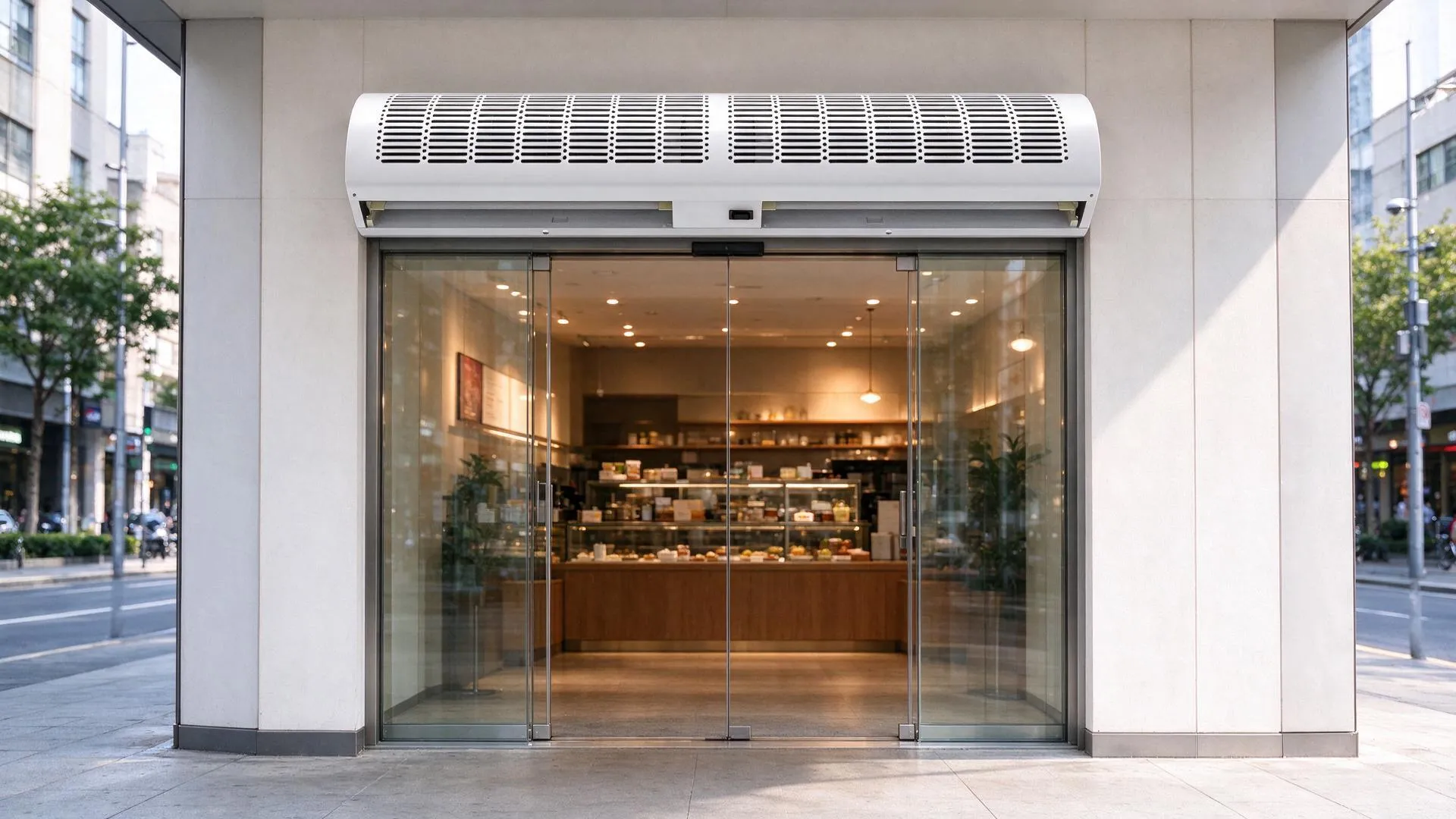
The Q Series offers different lengths and fan-power options for commercial doors. Compare HUANGXI and Mars Air models using the same door dimensions and site conditions.
Taller doors may need stronger centrifugal or recessed models. The correct choice depends on door height, air flow, wind exposure, and building pressure.
A unit that is too weak may not stop enough air exchange. An oversized unit can use more fan power than necessary.
For a wider comparison of commercial entrance types and selection factors, read the HUANGXI Commercial Air Curtain Selection Guide.
For large industrial or refrigerated doors, review the HUANGXI Dual Motor Cold Storage Air Curtain. Check its airflow rating against the doorway requirements.
Air curtains can reduce HVAC energy loss at open doors by limiting unwanted air exchange.
The best result comes from correct width, installation height, air speed, pressure, and controls.
Motor wattage alone does not show energy efficiency. Compare fan energy with the heating and cooling load that the air curtain prevents.
A well-matched system can reduce energy bills, improve comfort, and support long-term cost savings.
For a standard commercial entrance, see the HUANGXI Q Series Air Curtain. Compare its available lengths, air speed, air flow, and fan power with the actual doorway.
They can save energy when the reduction in doorway air exchange is greater than the fan electricity used. Results depend on door size, wind, pressure, traffic, and installation.
It reduces outdoor air entering the doorway. This can lower the heating and cooling load.
Lower doorway air exchange can reduce heating or cooling demand. The actual cost savings depend on climate, door use, HVAC efficiency, and the air curtain setup.
Use a fan setting that keeps the airflow stable across the full doorway. Increase speed only when site conditions require it.
The best model matches the door width, height, wind exposure, and building pressure. Standard doors often use cross-flow models. Taller or more exposed doors may need centrifugal units.
Yes. Door or presence controls can start the fan when the entrance is in use and reduce unnecessary runtime.